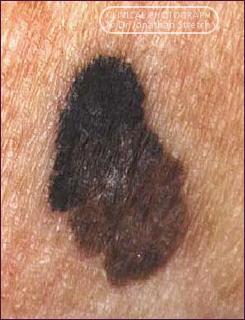
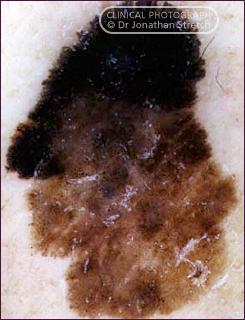
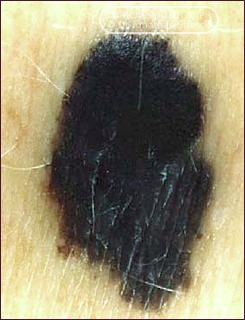
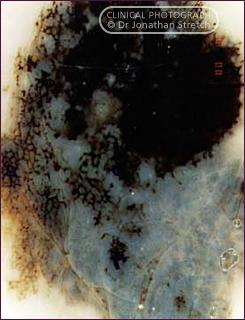
|
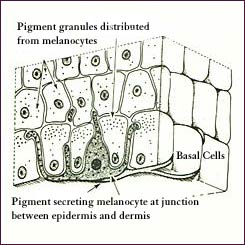
Melanocytes are found distributed in the skin
- Scattered
as individual cells at the junction of the upper (epidermis) and
lower (dermis) layers of the skin. These cells produce granules
of pigment (a suntan) in response to ultraviolet exposure.
- Aggregated
together (termed naevus cells) at various depths within the epidermis
and dermis. Characteristic patterns of aggregation can usually
be recognized by expert clinicians as those forming junctional,
dermal, compound and dysplastic naevi (moles).
A
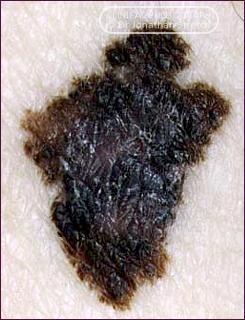
number of changes in the pigment cell (melanocyte) network of the
skin can be identified as potentially cancerous.
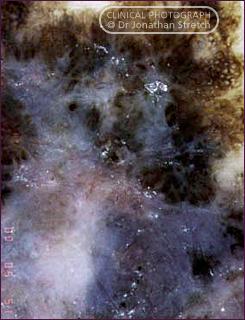
The
Dermascope is an instrument which allows groups of pigment
cells within the skin to be examined for changes which signal the
development of a melanoma. It is a microscope which is used on living
skin. Properly used, this instrument can substantially reduce the
need to excise many naevi. Dermoscopy has greatly aided the diagnostic
process.
|